
Review · WHALE WATCHING IN MOOREA
Half day whale tour 4h00
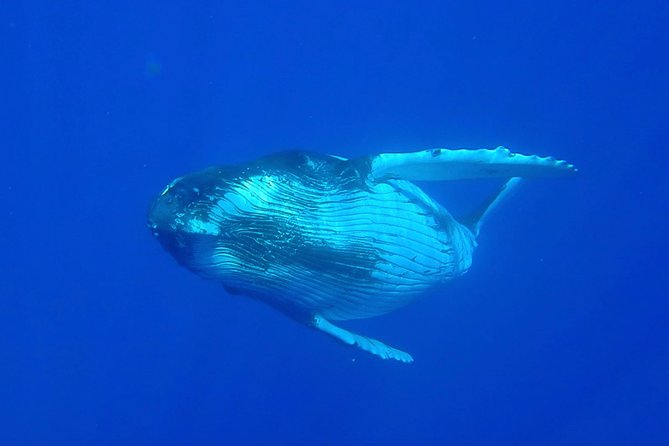
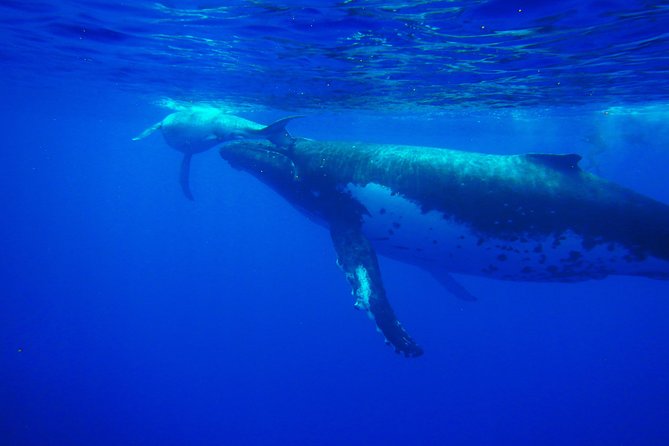
Whales do not follow a timetable. That is the charm of this four-hour Moorea outing, which uses a small boat, whale-listening equipment, and experienced guides to search for humpback whales between July and November. I like the chance to see mothers with calves in the open Pacific, and I like that masks, snorkels, fins, and drinks are included.
The strongest outings can bring you close to whales in the water, sometimes more than once. The catch is that this is a real ocean swim, not a gentle boat ride. You may need to swim about 100 meters from the boat, conditions can be rough, and swimming with whales is never guaranteed.
I also like the personal feel of a boat limited to 12 people, with guides such as Kevin, Mahai, and Michele praised for clear instructions, humor, and care around the animals. But a 12-person boat now means two water groups because only six people may enter the water at one time, a rule that can reduce your chance of swimming with the whales.
In This Review
- The details that matter most
- Setting out from Moorea Activities Center
- Searching for humpback whales from July to November
- The swimming test is an important part of the tour
- Six people in the water at a time
- Respecting whales in the open Pacific
- Snorkeling around ‘Ōpūnohu Bay
- Sea conditions, safety, and comfort
- Is $191.91 a fair price?
- Who should book this Moorea whale tour?
- Should you book it?
- FAQ
- Where does the whale tour start?
- Where does the tour end?
- How long does the tour last?
- When is whale season for this experience?
- Are snorkeling masks, snorkels, and fins included?
- Are drinks included?
- Is lunch included?
- How many people can join the boat?
- Is swimming with whales guaranteed?
The details that matter most
- Whale season runs from July through November: This is the period when humpback whales and their young may pass through Moorea.
- The boat holds up to 12 people: Six people may be in the water at once, so a full boat is divided into two groups.
- Swimming ability matters: Reaching the whales can require a strong, sustained swim in open water.
- The encounter is not guaranteed: You may see whales from the boat, swim with them, or find that conditions and whale behavior prevent an in-water meeting.
- Lagoon wildlife rounds out the trip: Time may include snorkeling near reef sharks, stingrays, turtles, and other fish around ‘Ōpūnohu Bay.
- The price is $191.91 per person: That is a serious excursion cost, but it includes equipment, drinks, a four-hour boat trip, and the possibility of a rare wild encounter.
Setting out from Moorea Activities Center
The tour begins at Moorea Activities Center in Opunohu, on Moorea. Pickup is offered, which can make the morning easier if you are staying elsewhere on the island, though you should confirm the pickup arrangement when booking. The activity finishes back at the meeting point.
The scheduled length is about four hours. That is enough time to search offshore, watch for whales, attempt an in-water encounter if conditions allow, and spend time around the lagoon. Still, four hours can pass quickly if the first search takes time or if the boat needs to move between whale sightings.
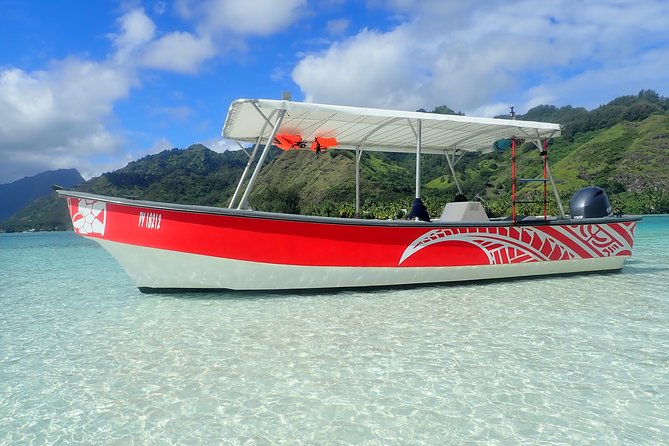
The boat is described as a small-group vessel, but small is relative here. Twelve people is far more intimate than a large sightseeing cruise, yet it is not the same as booking a private boat for six. If swimming with whales is your main reason for booking, ask how many people are scheduled for your departure.
More Whale Watching in Moorea
- Swimming with Whales in Moorea (Half Day tour)
★ 4.5 · 264 reviews - Whale Tour – Observe and swim with whales
★ 5.0 · 257 reviews - Swim with humpback whales
★ 5.0 · 224 reviews
Searching for humpback whales from July to November
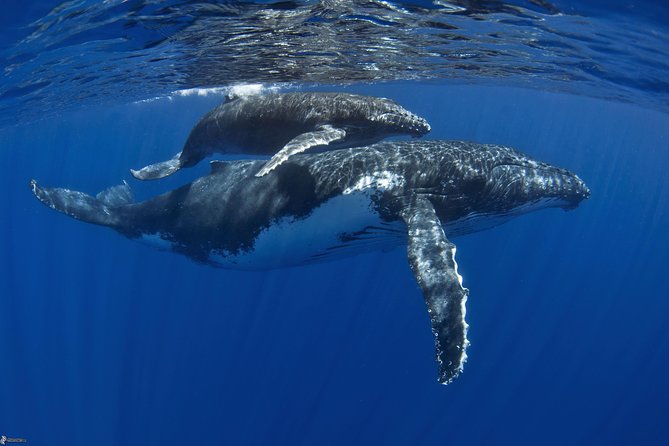
The main goal is to find humpback whales during their seasonal migration through Moorea. The crew uses high-tech listening equipment to hear whale sounds, which may help locate animals beneath or beyond the boat. That tool improves the search, but it cannot turn wild animals into a scheduled performance.
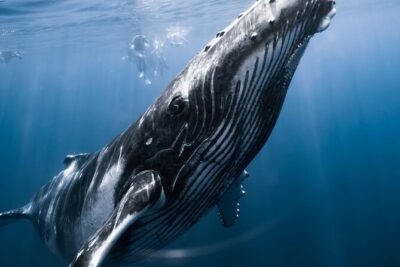
You may see a whale’s back, blow, tail, or movement from the boat. The distance can vary. One outing may bring a mother and calf close enough for an unforgettable view, while another may produce only a distant sighting. That difference is not a flaw in the ocean. It is the basic risk of choosing a wild-animal tour.
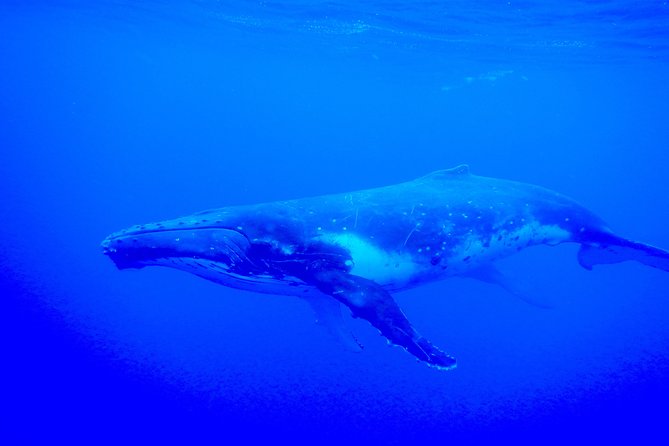
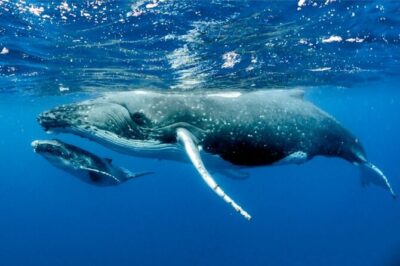
The most memorable encounters described from this experience involve mothers and calves, sometimes with several whales nearby. Some outings also found pilot whales. If you are lucky, you may hear whales singing before you see them, an eerie sound that makes the open sea feel much larger.
The crew’s approach matters. Kevin has been singled out for marine-life knowledge, calm direction, and keeping people together in the water. Captain Mahai has also earned praise for boat handling and for helping the group reach good viewing spots. Michele and other crew members have been described as helpful and entertaining.
The swimming test is an important part of the tour
Before heading out to the whales, the crew may ask you to complete a test swim in the bay. This is not just a formality. It helps the guide judge who can manage open-water swimming and helps you decide honestly if the whale swim is right for you.
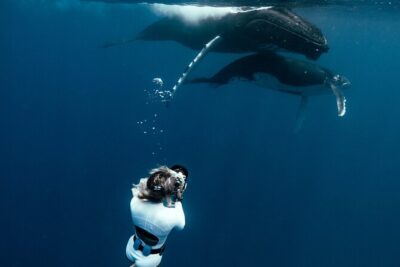
The distance to a whale can be roughly 100 meters from the boat. The boat must keep a legal distance from whales, especially when they are near the reef, so you cannot expect the captain to pull directly beside an animal and let everyone step in. You may have to swim toward the whales, then return to the boat after a short encounter.
This is where the tour divides its audience. If you swim regularly and feel comfortable in open water, the effort may be worth it. Strong swimmers have described reaching several whales and returning to the water more than once. If you are not a confident swimmer, the test can be tiring before the main activity even begins.
You can ask for a life jacket, but it is not compulsory. A flotation vest may make you feel safer, though it can make sustained swimming more difficult. The tour is best for people with a moderate physical fitness level, and I would treat that description seriously.
Six people in the water at a time
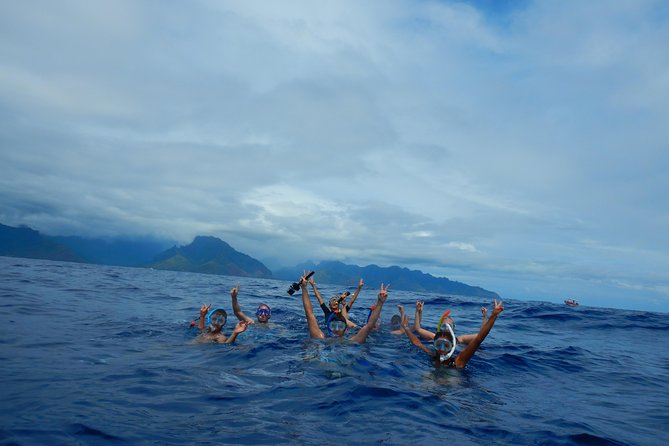
The boat can carry up to 12 people, but current rules limit the number in the water to six at once. A full departure must therefore split into two groups. This arrangement keeps the price below that of companies carrying only six people, but it creates a real tradeoff.
The first group may get into the water while the whales are nearby. By the time the second group is ready, the animals may have moved away. On another outing, the second group may have the better opportunity. Nature does not care which group has been waiting longer.
If every person in your party wants a serious chance to swim with whales, a private tour could be worth considering. The shared trip remains a reasonable option if you are happy to watch from the boat, accept the possibility of a short swim, or value the lagoon portion as much as the whale encounter.
This is also why you should not book the tour expecting everyone to swim with whales at the same time. The boat capacity is 12, the water limit is six, and the operator does not promise an in-water encounter.
A completely different kind of day:
- Moorea 6-Hour Snorkeling and Lunch Shared Tour
★ 5.0 · 1,758 reviews - Moorea 4WD Tour Inc. Belvedere, Pineapple Farm, Magic Mountain…
★ 5.0 · 967 reviews - Snorkeling excursion, discovery of the lagoon, small group.
★ 5.0 · 861 reviews - Franckyfranck Tours Moorea – Half day Tours
★ 5.0 · 817 reviews
Respecting whales in the open Pacific
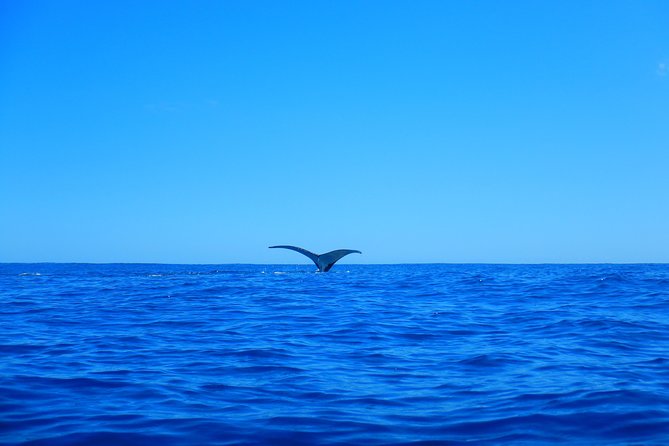
The restrictions may feel inconvenient, especially when a whale appears close to shore. They exist to keep boats and swimmers from crowding the animals. The boat cannot approach within 100 meters, and the crew must respond to whale behavior rather than force a meeting.
That can mean waiting, moving away, or abandoning an attempted swim. A whale may surface once and then disappear. A mother may rest while a calf moves around. The guides may ask you to keep together, avoid noisy splashing, and maintain a respectful distance.
This is not a controlled marine park. A whale’s tail can cause serious harm, and the crew’s instructions are not optional decoration. You should be prepared to follow signals quickly, stay with your group, and return to the boat when directed.
The best part of the tour is also the part that demands the most patience. A wild whale encounter has value because the animal chooses the distance and timing.
Snorkeling around ‘Ōpūnohu Bay
The itinerary includes time at ‘Ōpūnohu Bay, described as a walk in the bay, with snorkeling equipment supplied. The bay and lagoon portion give the outing a second act, especially if the whales remain distant or the sea conditions prevent swimming with them.
Masks, snorkels, and fins are loaned for the trip. Bring your own equipment only if you strongly prefer a particular fit, but the supplied gear is meant to cover the basic needs of the outing. Test your mask and snorkel before leaving the boat area, and tell the guide at once if anything leaks or does not work properly.
The lagoon portion may include reef sharks, stingrays, turtles, and other fish. These sightings are not presented as a guaranteed checklist, but they can turn a disappointing whale search into a worthwhile marine-life outing. Some people who could not manage the whale swim still found the sharks and rays to be the highlight.
This part of the trip is also useful for anyone in your group who chooses to remain on the boat during the whale attempt. You do not all need the same level of swimming ability to enjoy the full four hours, though the experience will feel different for strong swimmers and non-swimmers.
Sea conditions, safety, and comfort
Moorea’s water can change quickly. Rain and swell do not automatically mean the trip will be canceled, but rough conditions can make the boat ride uncomfortable and the swim much harder. Some outings have taken place in choppy water, while others have had calm conditions that made repeated swims possible.
If you get seasick or are not used to boats, consider taking appropriate medicine before departure. The ride to open water can be rocky, and the swim itself may feel strenuous even on a calm day.
Life jackets are available, but the operator does not require them. That policy suits strong swimmers who need to cover distance, but it may concern anyone who wants flotation support. You should make your own comfort clear before entering the water and never feel pressured to swim.
Snorkel equipment should be checked before use. If a mask or snorkel is faulty, ask the guide to replace it. Smoking is not permitted on the boat, and any violation should be reported to the crew immediately.
The guides give instructions about sharks, whale behavior, swimming formation, and how to return to the boat. You may find some of the warnings sobering. That is preferable to treating the ocean like a swimming pool, but the briefing should leave you informed rather than frightened.
Is $191.91 a fair price?
At $191.91 per person, this is not a casual add-on. You are paying for a four-hour small-boat outing, a crew, whale-location equipment, snorkeling gear, drinks, and the possibility of an encounter that cannot be produced on demand.
The value is strongest if you see whales well and have the chance to enter the water. Several successful outings included mothers and calves, repeated swims, singing whales, and extra wildlife such as reef sharks and stingrays. Those are powerful memories, and the price may feel justified afterward.
The value is weaker if your main goal is guaranteed swimming. You could spend the trip watching distant whales, waiting for an animal to return, or sitting out because the sea is too rough. A full boat also means two water groups, which can reduce each person’s opportunity.
Compared with a private outing, the shared tour is designed to keep the price more reasonable. If you want exclusive timing and no second group, paying more for a private experience may make sense. If you want a chance at whales plus lagoon wildlife without committing to a private boat, this shared tour offers a fairer balance.
Who should book this Moorea whale tour?
I would choose this experience if you:
- Swim confidently in open water.
- Accept that whales may remain distant.
- Want a small boat rather than a large cruise.
- Enjoy several kinds of marine life, not only humpback whales.
- Can handle a rough ride and changing weather.
- Are willing to follow strict instructions around wild animals.
I would think twice if you:
- Need a guaranteed in-water whale encounter.
- Are uncomfortable swimming about 100 meters from the boat.
- Get anxious in swells or open ocean.
- Want a quiet sightseeing cruise with little physical effort.
- Are upset by the possibility of being in the second water group.
- Require a mandatory life jacket.
Book at least a few weeks ahead if your schedule is tight. The tour is often reserved well in advance, with an average booking lead time of about 59 days. Confirmation is sent within 48 hours, subject to availability.
Free cancellation is available until 24 hours before the start time. If poor weather cancels the tour, you can receive a different date or a full refund. Late cancellations and late changes are not refunded.
Should you book it?
Book this tour if the phrase wild whale encounter means more to you than guaranteed results. The strongest days can be extraordinary: mother and calf pairs, whale songs, repeated swims, and a calm, capable guide such as Kevin working alongside Captain Mahai.
Do not book it as an easy boat excursion. You may need to swim hard, deal with swell, wait your turn, and accept that the whales decide what happens. If you understand those limits, the four-hour format gives you a good mix of whale search, lagoon snorkeling, sharks, rays, and the simple pleasure of being on Moorea’s Pacific waters.
FAQ
Where does the whale tour start?
The tour starts at Moorea Activities Center in Opunohu, Moorea, French Polynesia.
Where does the tour end?
The activity ends back at the meeting point.
How long does the tour last?
The tour lasts approximately four hours.
When is whale season for this experience?
The best stated period is from July through November, when humpback whales and their young may pass through Moorea.
Are snorkeling masks, snorkels, and fins included?
Yes. Masks, snorkels, and fins are loaned for the tour.
Are drinks included?
Yes. Drinks are offered during the tour.
Is lunch included?
No. Lunch is not included.
How many people can join the boat?
The boat can carry a maximum of 12 people. Only six people may be in the water at one time, so a full group may be divided into two water groups.
Is swimming with whales guaranteed?
No. Seeing whales and entering the water with them depend on whale behavior, weather, sea conditions, and safety rules.
Just added in Moorea
- moorea tubing★ 5.0 · 12 reviews
- Yoga at sunrise at Sofitel Moorea, overlooking Tahiti★ 5.0 · 3 reviews
- Unique photo shoot in the heart DE Moorea: Beach & mountain combo★ 5.0 · 3 reviews
- Whale Watching Moorea (non-swimming)★ 4.0 · 12 reviews
- Watch and Swim with Humpback Whales in Moorea★ 5.0 · 3 reviews
- Snorkeling Safari Moorea (Half Day Tour)★ 5.0 · 3 reviews
- Snorkeling Tour in Moorea Aquatic Adventure Half Day★ 5.0 · 4 reviews
- Shared Transfer : Hotel to Moorea Airport (or) Pier★ 4.5 · 9 reviews
Whale Watching in Moorea, compared.
Swimming with Whales in Moorea (Half Day tour)
Read our review →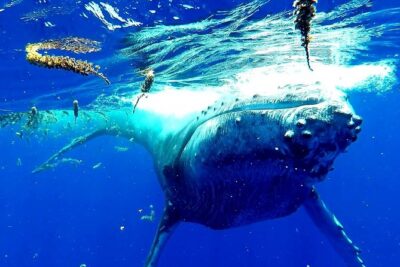
Humpback whale watching and marine life in Moorea
Read our review →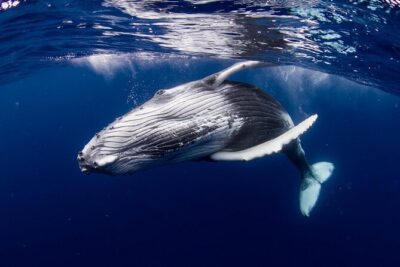
Private tour observing and swimming with humpback whales in Moorea
Read our review →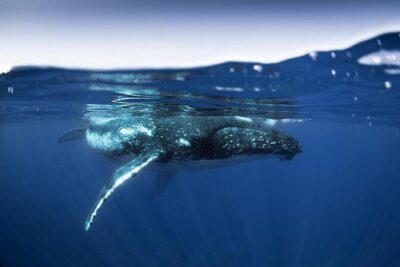
Browse the lists this tour appears in