
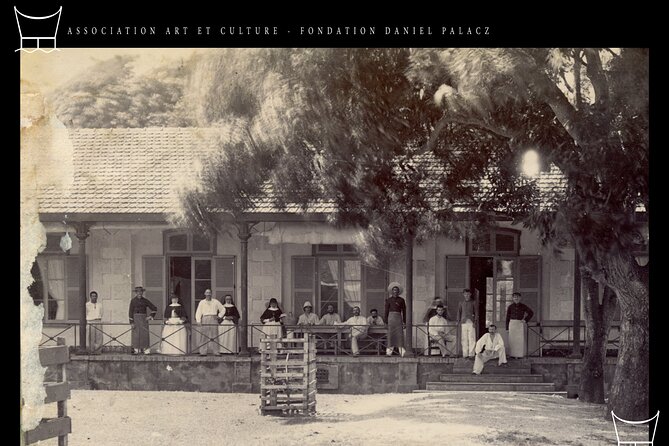
Review · WALKING TOURS
Papeete cultural and historic walking tour at night
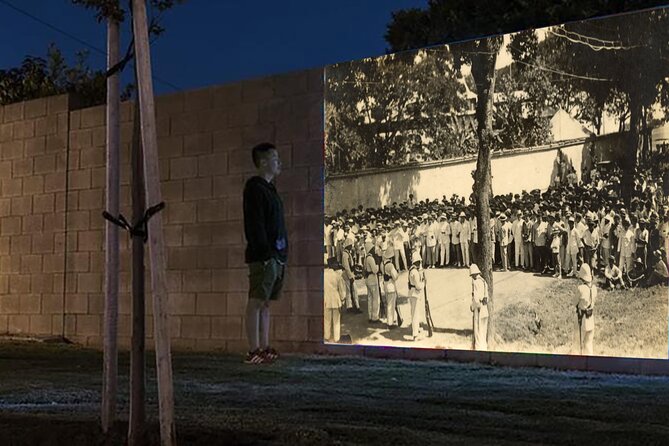
Papeete changes after sunset. This two-hour evening walk uses a video projector to place old photographs on walls and other city surfaces, turning streets and buildings into an open-air museum. I like the unusual timing, when offices have emptied and the city’s bars and restaurants are coming to life, and I like the focus on Papeete’s social, political, and economic past. The small group, capped at 10 people, should also make it easier to follow the guide’s stories.
The main drawback is that much of the tour happens outdoors, so good weather matters. Some stops are brief, and the tour does not include private transportation or admission tickets to paid sites. Still, for visitors who want more than a daytime introduction to Tahiti’s capital, this offers a thoughtful way to see Papeete from a different angle.
In This Review
- Key points about the Papeete night walk
- Why Papeete is worth seeing after dark
- Meeting at the Papeete waterfront
- The French Polynesia Assembly and the first old photographs
- Vaiami, Papeete’s oldest colonial building
- One hour through Papeete’s former colonial streets
- Pre-European Polynesian objects through projected images
- How the projected photos shape the experience
- Is $72.88 a fair price?
- The guide and the tone of the walk
- Weather, cancellation, and practical planning
- Should you book the Papeete cultural night walk?
- FAQ
- Where does the Papeete night walking tour begin?
- What time does the tour start?
- How long does the experience last?
- Where does the tour finish?
- What is included in the tour?
- Is transportation included?
- How many people can join the tour?
- What happens if the weather is poor?
Key points about the Papeete night walk
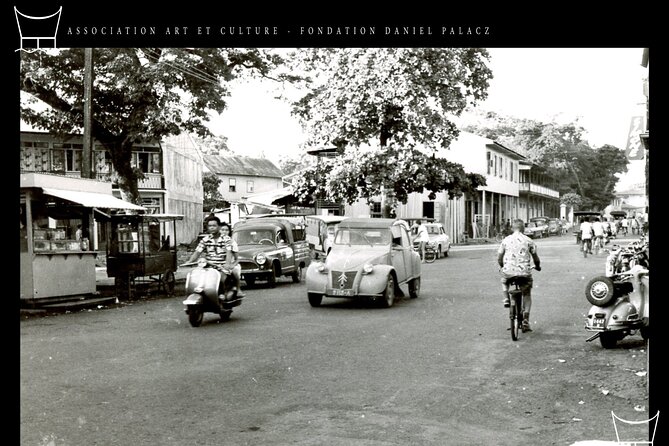
- Old photographs become part of the city: A video projector places images on walls and urban surfaces, giving familiar streets a visual link to the past.
- The tour begins at 5:30 pm: The early evening timing lets you see Papeete as offices close and restaurants and bars begin their nightly trade.
- Colonial history comes first: The route includes the French Polynesia Assembly and the former Vaiami colonial hospital.
- Polynesian life before European contact is included: Images of ancient objects add a cultural layer beyond colonial architecture.
- The group is limited to 10 people: This is a much more personal format than a large city tour.
- It costs $72.88 per person: The price is easiest to justify if you value interpretation, projected images, and a small group rather than transport or entry tickets.
Why Papeete is worth seeing after dark
Many introductions to Papeete focus on markets, waterfront views, or a quick stop before a ferry or cruise departure. This walk takes a different route. It treats the city itself as the exhibit, using streets, buildings, and public surfaces as places to tell the story.
The timing is important. Starting at 5:30 pm gives you a city in transition. Government and commercial offices are no longer the main presence, while eating and drinking places begin to fill. That shift helps you see Papeete as a lived-in capital, not just a place that serves as a base for beaches and island excursions.
I like this approach because history feels less remote when it is tied to the street under your feet. An old photograph projected onto a wall can help you compare the city of the past with the one in front of you. The tour is not simply a walk past buildings. It connects architecture, public life, politics, trade, and Polynesian culture.
The route lasts about two hours and returns to the same meeting point. That makes it easy to fit into an evening, especially if you are staying in Papeete or arriving in the city without arranging a separate ride.
More walks in Tahiti:
- Papeete Walking Tour – Tahiti
★ 5.0 · 78 reviews - Papeete : walking tour
★ 4.9 · 69 reviews - Shared 2 Hour Papeete Walking Tour
★ 5.0 · 13 reviews
Meeting at the Papeete waterfront
The tour begins at the Office du Tourisme, also called Fare Manihini, on the Front de Mer. The address is N91, Quartier du commerce, BP 65, 98714 Boulevard de la Reine Pōmare, Papeete.
This is a practical starting point because the route begins in the central part of town. You should plan to arrive with enough time to locate the office and meet the guide before the 5:30 pm departure. The activity ends back at this same meeting point, so you do not need to arrange a pickup at another part of the city.
The tour includes a video projector, but not private transportation. That distinction matters. You are paying for the guided walk and visual presentation, not a vehicle, hotel transfer, or admission to a museum.
The group size is limited to 10 people. That is one of the strongest practical features here. A small group should make it easier to hear while standing near a projected image and easier to ask a question when a story catches your attention.
The French Polynesia Assembly and the first old photographs
The first stop is around the Assembly of French Polynesia. You spend about five minutes here, hearing stories about the Papeete of earlier times while old photos are projected onto walls or other nearby surfaces.
Five minutes may sound short, but this stop works as an introduction rather than a full architectural visit. The point is to establish the city’s political setting and show how the capital looked in another era. The projected images add something you would not get from simply walking past the Assembly on your own.
Admission is not included, although the stop does not appear to include an entry visit. You should think of it as an exterior storytelling point. If you want a long look inside government buildings, this is not that kind of tour.
The setting also helps explain why Papeete became the center of political life in French Polynesia. The tour promises attention to the social, economic, and political development of the capital, and the Assembly is a logical place to begin that discussion.
Vaiami, Papeete’s oldest colonial building
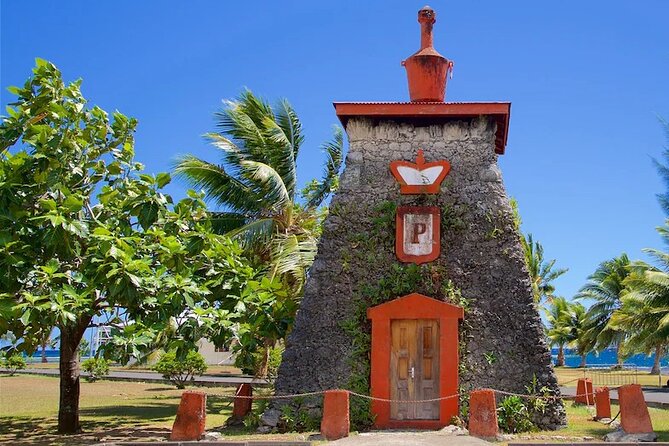
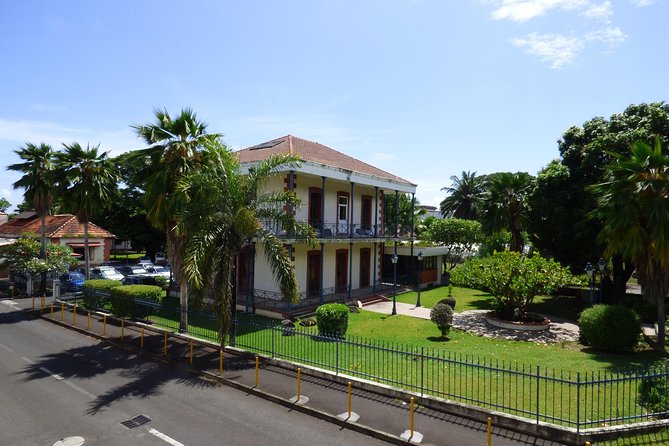
The next stop focuses on the old colonial hospital at Vaiami. The building dates to 1848 and was constructed during the war between Tahitian resistance fighters and French marines.
That date gives this short stop real weight. You are not looking at a decorative old structure with no context. The hospital is tied to a period of conflict and French colonial expansion, so its story helps explain how power changed in Tahiti.
The stop lasts about five minutes. Again, this is a quick exterior-focused history point rather than a long building tour. The value comes from the explanation of the building’s place in Papeete’s past.
I appreciate that the route does not present colonial architecture without discussing the forces behind it. A visit to an old French building can feel incomplete if it only celebrates age and appearance. Here, the historical setting includes Tahitian resistance and French military involvement, giving you a more balanced frame.
Admission is not included. The available information does not indicate that you enter the former hospital, so you should expect to view the site as part of the walking route.
More history tours in Tahiti:
- Tahiti Private Half Day Tour. Nature, history and culture
★ 4.9 · 14 reviews - Papeete and Tahiti Historical and Cultural Tour
★ 5.0 · 8 reviews - Papeete Cultural Tour and Tahitian Tuna Workshop
★ 5.0 · 1 review - Bora Bora: 4WD History & Culture Tour
★ 4.6 · 69 reviews
One hour through Papeete’s former colonial streets
The longest part of the tour lasts about one hour and moves through Papeete itself. You will see streets that may be lit or unlit, with old photographs projected onto urban surfaces to recreate the atmosphere of the former French colonial city.
This is likely the core of the experience. The Assembly and Vaiami provide fixed historical points, but the city walk gives the stories room to connect. You can consider how streets, buildings, and public spaces changed as Papeete developed into the capital of French Polynesia.
The night setting changes how you read the city. In daylight, practical details often dominate: traffic, shop signs, office fronts, and errands. After sunset, projected images can make a wall or street corner feel like a page from an old album. The method is simple, but it gives the guide a way to show change rather than only describe it.
You should expect a steady walking experience through central streets, but the supplied details do not specify the exact distance, pavement conditions, or number of walking pauses. If you have mobility concerns, it is sensible to ask the operator before booking. Most people can participate, but that general statement does not replace a specific accessibility check.
The route may also include darker streets. That is part of the nighttime character, but it means you should wear comfortable shoes and stay attentive to the guide. The tour is designed around the atmosphere of evening Papeete, not around brightly lit indoor galleries.
Pre-European Polynesian objects through projected images

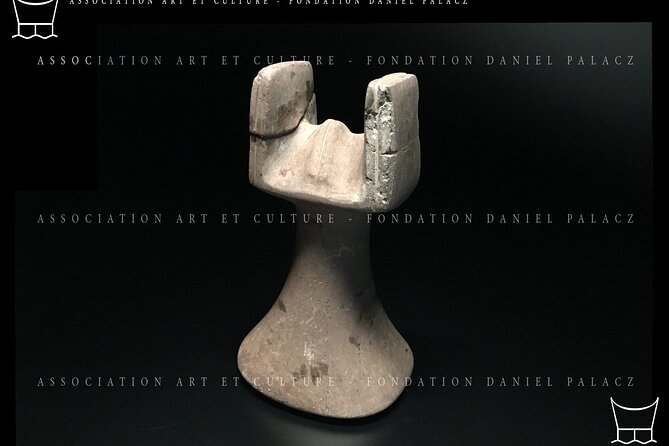
The final major portion lasts about 50 minutes and focuses on objects from Polynesian life before European contact. These are shown through photographs projected onto urban supports rather than presented as physical museum displays.
This section broadens the tour beyond French colonial history. Without it, the walk might feel centered mainly on European buildings and administration. Images of pre-European objects help place Polynesian culture at the center of the story.
You will not be handling artifacts or walking through a conventional museum collection. The objects are presented through projected photographs, so the quality of the guide’s explanation matters. The format is especially useful when you want cultural context but have limited time for a formal museum visit.
I also like the contrast between ancient objects and modern city surfaces. A photograph of an old Polynesian object appearing on a wall in present-day Papeete creates a direct link between past and present. It is not a substitute for a museum, but it is a memorable way to encounter cultural material during an evening walk.
The information provided does not list the specific objects shown. You should book this section for the method and the subject rather than expecting a named collection or a detailed artifact catalogue.
How the projected photos shape the experience
The projector is the tour’s defining feature. Without it, this would be a conventional guided walk with stories told at selected locations. With it, the guide can show you what Papeete looked like, not just explain it.
Projected images also help people who learn visually. A description of an old street can be hard to picture, especially when modern buildings have replaced earlier ones. An archival photo placed near the same setting gives you something concrete to compare.
There are limits. Outdoor projection depends on conditions, available surfaces, and darkness. The supplied information does not promise a particular image size, sound system, or number of photographs. You should see the projector as a useful storytelling tool, not as a cinematic production.
The format also means the tour is best enjoyed at a relaxed pace. You will likely stop while the guide explains an image, then move on to another part of town. If you prefer fast sightseeing with many landmarks, this may feel slow. If you like connecting places with stories, the pace should suit you.
Is $72.88 a fair price?

At $72.88 per person, this is not a cheap way to spend two hours in Papeete. The fee does not cover private transportation, and there are no listed admission tickets included. You are paying mainly for the guide, the small group, the route, and the projector-based presentation.
The value depends on what you want from a city tour. If you only need to locate the waterfront, restaurants, or major central streets, you can explore without booking this activity. If you want someone to explain the political and colonial development of Papeete while showing archival images, the price becomes easier to understand.
The maximum group size of 10 improves the value. A small group can make a guided walk feel more like a conversation than a procession. It also matters during the projected-image stops, when being close enough to see the pictures and hear the explanation makes a real difference.
The tour has received a five-star rating from the two reviews provided, including praise for being fun and informative. One review also encouraged people to learn about Papeete’s past, present, and future. That is a useful description of the tour’s purpose, but the sample is very small, so I would not treat the rating as a broad statistical guarantee.
The provider, FAATI CITY, identifies the experience as the only excursion of its kind at this time. That makes the projected nighttime format unusual in the local tour mix. For a first evening in Papeete, or for someone who has already seen the basic waterfront sights, the distinct format may justify the cost.
The guide and the tone of the walk
The available response from the provider is signed Christian. The material does not give a full guide biography, but Christian appears to be involved in the operation and responded warmly to the positive comment about visiting Papeete at night.
That nighttime focus is worth noting. Many city walks end before the evening begins. This one is built around the fact that Papeete feels different after work hours, when offices empty and bars and restaurants become more active.
The experience should suit you if you enjoy hearing local stories, asking questions, and pausing at a place to understand its past. It may be less suitable if you want a purely scenic stroll, a food tour, or a formal museum visit with physical displays.
The tour is also a good fit for anyone who wants a compact introduction. Two hours is long enough to cover several themes but short enough to leave the rest of the evening free. Since the tour returns to the starting point, you can continue with dinner afterward without solving a complicated transport problem.
Weather, cancellation, and practical planning
The activity requires good weather. If poor weather causes cancellation, you will be offered another date or a full refund. That is important in Papeete, where an outdoor projection and walking route cannot simply move indoors without changing the experience.
You can cancel for a full refund up to 24 hours before the start time. Cancellations or changes made less than 24 hours before departure are not accepted for a refund, and the local time in French Polynesia controls the deadline.
Confirmation is provided when you book. Most people can participate, and the group is limited to 10. Since the exact walking distance and surface conditions are not stated, ask FAATI CITY directly if you need specific mobility information.
Wear shoes suitable for a two-hour walk and plan for an outdoor evening. The tour begins at 5:30 pm, but the supplied information does not state the exact finishing time beyond the approximate two-hour duration.
Should you book the Papeete cultural night walk?
Book it if you want context rather than a checklist. The projected old photographs, the 1848 Vaiami hospital, the French Polynesia Assembly, and the presentation of pre-European Polynesian objects give the walk a clear purpose. You will see Papeete as a capital shaped by political change, colonial rule, Polynesian culture, and modern evening life.
Think twice if you want transport, indoor museum access, or a large number of major attractions. The route includes short stops, outdoor walking, and visual storytelling rather than entry into a series of buildings.
For the right audience, this is a distinctive evening introduction to Papeete. The small group and unusual projector format are its best advantages. Just keep the weather policy, the $72.88 price, and the outdoor setting in mind before you book.
FAQ
Where does the Papeete night walking tour begin?
It begins at the Office du Tourisme, also called Fare Manihini, on the Front de Mer de Papeete at N91, Quartier du commerce, Boulevard de la Reine Pōmare.
What time does the tour start?
The tour starts at 5:30 pm.
How long does the experience last?
The walking tour lasts approximately two hours.
Where does the tour finish?
The activity ends back at the original meeting point.
What is included in the tour?
A video projector is included. The projector is used to show old photographs and images of Polynesian objects on urban surfaces.
Is transportation included?
No. Private transportation is not included.
How many people can join the tour?
The activity has a maximum group size of 10 people.
What happens if the weather is poor?
The experience requires good weather. If it is canceled because of poor weather, you will be offered a different date or a full refund.
Just added in Tahiti
- VIP Ferry crossing from Tahiti to Moorea★ 5.0 · 2 reviews
- Wholesale Fishing in Poti Marara at Tahiti Teahupoo Peninsula★ 5.0 · 4 reviews
- Small group snorkeling (5 people max): wrecks & tropical fishes at 3:30pm★ 5.0 · 7 reviews
- Unforgettable sunset against Moorea★ 5.0 · 1 review
- Whale Watching Activity★ 5.0 · 8 reviews
- Taxi Boat to Watch the Teahupoo International Surfing Competition★ 4.5 · 13 reviews
- Teahupoo Olympic Wave Journey★ 5.0 · 6 reviews
- SURF TAHITI Bites & Waves – Surf experience with every bite★ 5.0 · 7 reviews
Walking Tours, compared.

Browse the lists this tour appears in