
Review · WHALE WATCHING IN TAHITI
Whale watching DE Humpback West Coast of Tahiti
Whales turn a boat trip into a story. This four-hour excursion from Puna’auia offers a close look at humpback whales in their seasonal Pacific home, with a small group, a locally built boat, and a professional crew explaining the animals and their behavior. The chance to enter the water is available when conditions and local rules allow.
I like the small maximum group of eight, which should make the boat feel more personal than a crowded whale-watching outing. I also like that coffee, tea, snacks, water, safety equipment, and snorkeling gear are included. The main consideration is that whale sightings, close approaches, and swimming with whales are never guaranteed. The experience works best if you value time on the ocean and wildlife watching, not a promised underwater encounter.
The trip begins at 7:30 a.m. from Pontons Taapuna in Puna’auia and returns to the same meeting point. It costs about $167.34 per person, a fair but not minor expense for a four-hour activity. You are paying for a small boat, a trained crew, equipment, and the possibility of an encounter that nature controls completely.
In This Review
- Key points before you book
- Why Tahiti’s humpback season matters
- Meeting at Pontons Taapuna at 7:30 a.m.
- A locally built boat and a small group
- Searching for whales along Tahiti’s west coast
- The possible water encounter
- What the whale encounter can feel like
- Price and what the $167.34 covers
- Who should book this excursion
- Weather, cancellations, and timing advice
- My verdict: book it for the chance, not the guarantee
- FAQ
- Where does the whale-watching tour begin?
- What time does the tour start?
- How long does the excursion last?
- When is whale watching allowed?
- Can everyone swim with the whales?
- What is included in the price?
Key points before you book
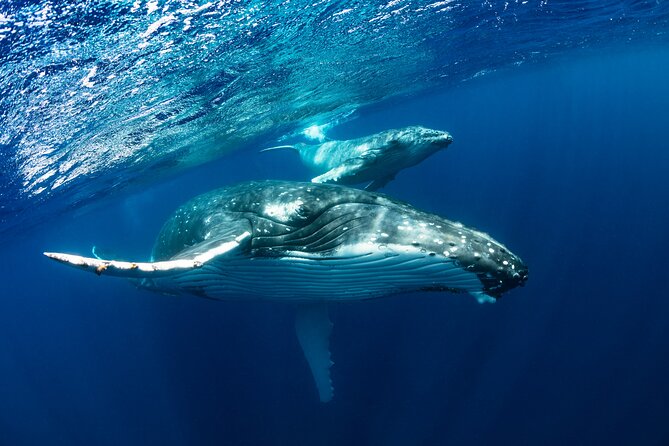
- Humpback season runs from July 20 to November 20: The activity is allowed during this period, subject to approval from French Polynesia’s environmental authority.
- The boat leaves from Puna’auia: You meet at Pontons Taapuna at 7:30 a.m. and finish back at the same place.
- The group is limited to eight people: This includes a maximum of six swimmers and one guide in the water at a time.
- Swimming with whales is optional: The captain and crew decide what is safe, and entering the water is not automatic.
- You need real ocean confidence: Anyone entering the water must be able to swim at least 200 meters without help and remain calm near very large marine animals.
- Children under 12 stay on the boat: Ages 12 to 17 need parental permission to enter the water, and non-swimmers can watch from aboard.
Why Tahiti’s humpback season matters
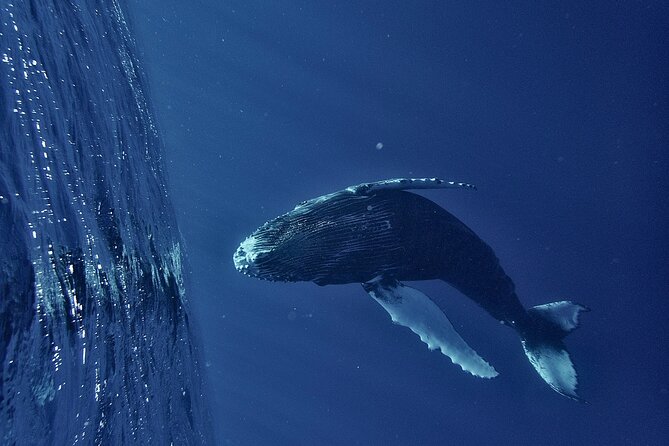
Each year, humpback whales travel north from Antarctic waters into the warmer southern Pacific. They come to breed, give birth, and raise their young before returning toward Antarctica near the end of November.
That seasonal pattern gives this excursion a clear purpose. You are not simply taking a boat ride and hoping something appears. You are visiting during the period when humpbacks gather in Tahitian waters for important parts of their life cycle.
The strongest viewing period is generally from October into the weeks before the return migration. Still, the permitted activity begins on July 20, and the exact quality of any outing depends on the whales, the sea, the weather, and the rules in force that day.
That uncertainty is part of the bargain. The crew can search and guide, but they cannot order a whale to surface. You should book this with an open mind. A successful morning may mean seeing several groups from the boat. On a particularly fortunate trip, you may see a mother and young whale together or receive permission to enter the water nearby.
More Whale Watching in Tahiti
- Respectful whale excursion to Tahiti in 4h30
★ 4.5 · 123 reviews - Tahiti island: Whale watching Experience
★ 4.2 · 79 reviews - Guided Small Group Whale Watching and Swim Tour Tahiti
★ 5.0 · 57 reviews
Meeting at Pontons Taapuna at 7:30 a.m.
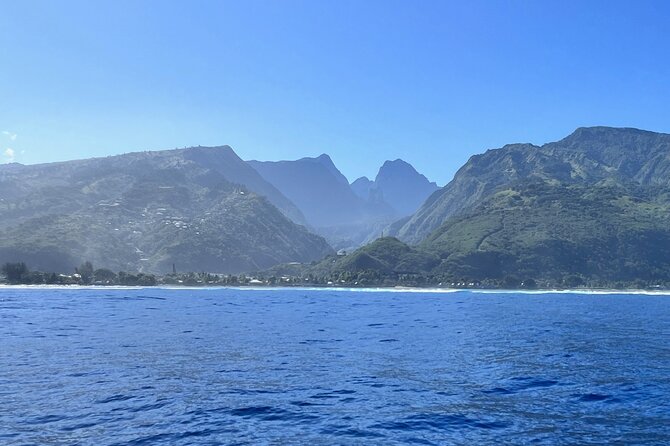
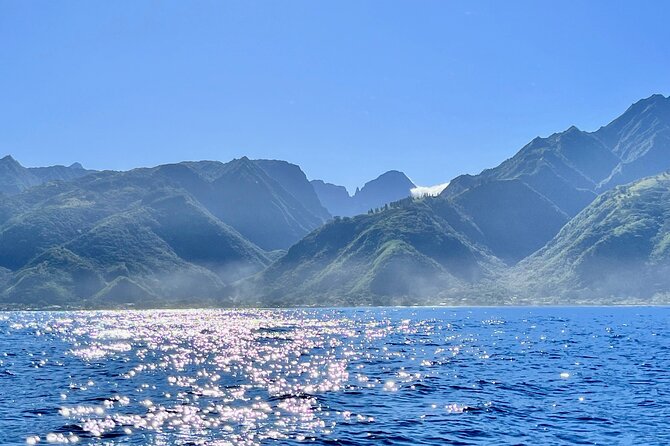
The tour starts at Pontons Taapuna in Puna’auia on Tahiti’s west coast. You should plan to arrive ready for an early morning on the water. The activity ends at the same meeting point after roughly three to four hours.
Pickup is not included, although it may be possible to arrange it on request. That matters if you are staying away from Puna’auia or do not have easy transport. Ask about this before booking rather than assuming a hotel transfer is part of the price.
The morning start is useful for a practical reason: it gives the crew a full block of time to search for whales before the day is over. It also keeps the schedule compact. You are unlikely to lose an entire day to the excursion, leaving room for other plans in Tahiti.
The exact route is not presented as a fixed series of stops. That is normal for whale watching. The boat goes where conditions and whale activity make sense, rather than following a sightseeing circuit with guaranteed viewpoints.
A locally built boat and a small group
The boat is locally built and adapted for marine excursions. The group limit is eight people, a useful detail when you are comparing this activity with larger whale-watching boats.
A small group gives you a better chance of hearing the guide and asking questions. It also makes the crew’s welcome and onboard service feel more direct. With six swimmers and one guide allowed in the water, the capacity rules are clear, although not everyone will necessarily enter the sea.
The boat is described as comfortable, but you should still prepare for a real ocean outing. The crew provides safety equipment and snorkeling gear, along with bottled water, coffee or tea, and snacks. Those inclusions keep the morning simple, especially since you do not need to arrange your own mask and fins.
The boat is a working platform for wildlife observation, not a guaranteed viewing theater. You may spend time moving slowly, waiting, and watching the surface. Bring patience along with your camera.
Searching for whales along Tahiti’s west coast
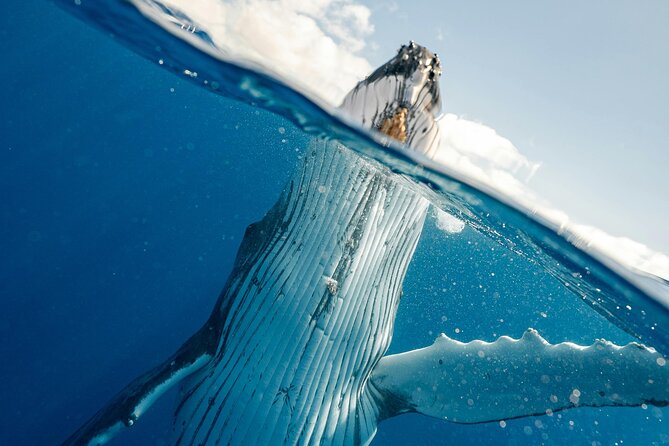
Once underway, the professional guide and captain organize the search. The crew explains the species observed and their way of life, helping you understand what you are seeing instead of treating every distant splash as a spectacle.
A humpback may surface briefly, travel in a group, sing underwater, or remain difficult to spot. The experience can change quickly. You might see several groups on one outing, as happened during one especially successful excursion, or you might have a quieter day governed by poor visibility or whale movement.
The reports from previous departures include a male whale and a young singing male early in the season. One outing also involved several groups and a mother with her young. These details are encouraging, but they should not be treated as a promise for your date.
The crew’s role is important here. Good wildlife guiding means explaining what the animal is doing while keeping the approach controlled. French Polynesian rules define how boats approach marine mammals and when people may enter the water. The team must follow those rules even when a whale appears close enough for a thrilling photograph.
A completely different kind of day:
- 5 Hours Tahiti Island Tour – West and East Coast
★ 5.0 · 1,020 reviews - Crossing Island of Tahiti 4×4 Mountain, Waterfall, River, Basins
★ 4.5 · 532 reviews - Découvrez le Mana durant la traversée de Tahiti en 4×4 Safari
★ 5.0 · 456 reviews - Moorea Street Food Tour
★ 5.0 · 410 reviews
The possible water encounter
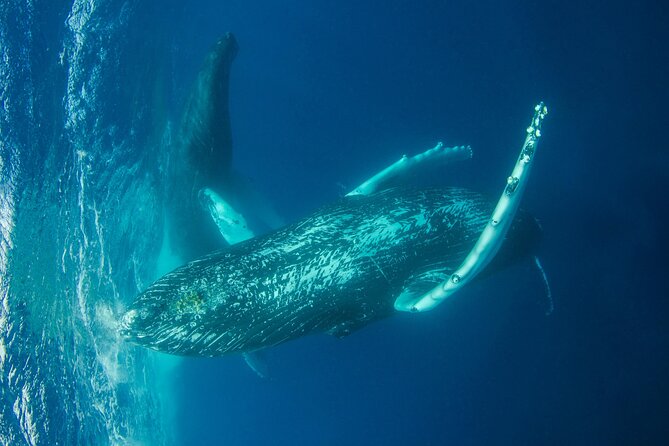
The most unusual feature of this outing is the chance to swim near a humpback when conditions are right. This is not a standard part of every departure, and launch is never mandatory or systematic.
The crew decides if an entry is appropriate. They must consider sea conditions, the whale’s behavior, distance, safety, and the applicable local regulations. A sighting from the boat may be the correct outcome even when you had hoped to swim.
You also need to meet firm requirements. Anyone entering the water must:
- Swim at least 200 meters without assistance
- Feel comfortable in the open ocean, including getting in through a boat slide
- Stay calm near marine animals weighing roughly one to 30 tonnes
- Understand that children under 12 cannot enter the water
- Provide parental authorization for participants aged 12 to 17
The maximum permitted number in the water is six swimmers plus one guide. This limits crowding and gives the guide a manageable group to supervise.
If you are unsure about your swimming ability, choose to watch from the boat. That is not a lesser version of the excursion. A calm observer is safer and more useful to the crew than someone who panics in the water. The company also notes that children and adult non-swimmers can participate as onboard observers.
What the whale encounter can feel like
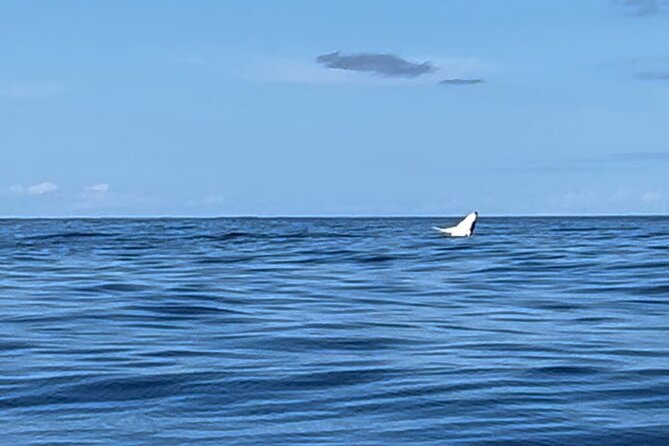
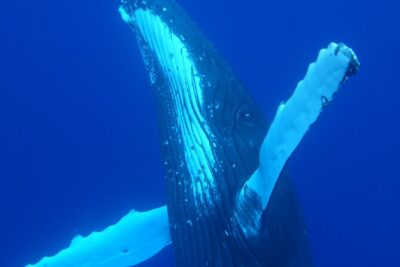
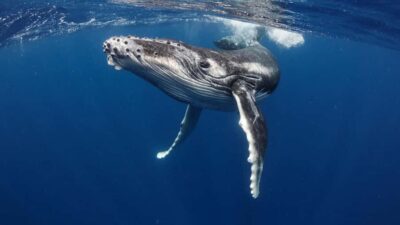
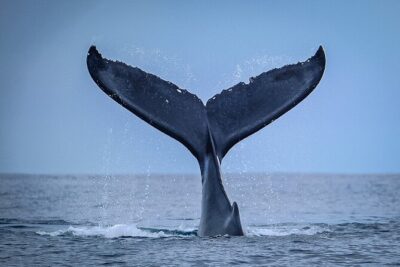
A whale in the water changes your sense of scale. From a boat, you may first notice a back, a blow, or a tail. In the sea, even a young whale can appear enormous, and the guide’s instructions become more important than your excitement.
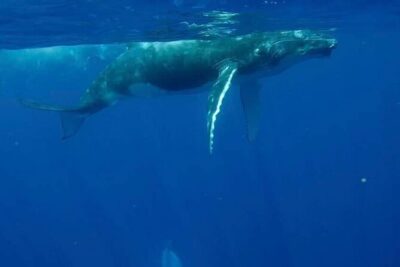
The available accounts describe swimming near a whale and a young whale, including a young male that was singing. That kind of encounter can be profoundly memorable because it is quiet, brief, and dependent on the animal’s choice to remain nearby.
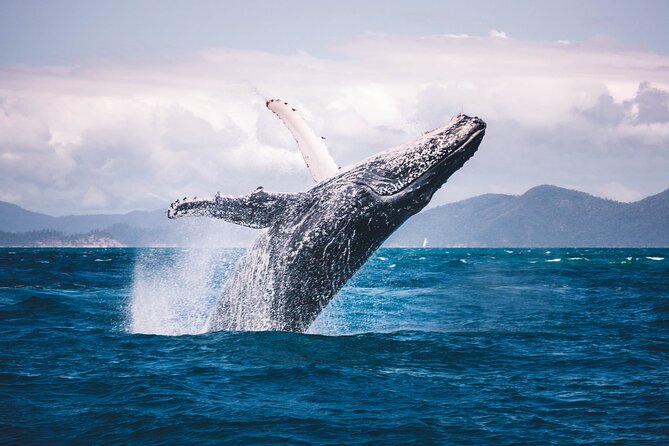
You should not expect a performance. There is no guarantee of a breach, a tail slap, or a close pass. The best approach is to keep your expectations modest and let the natural behavior carry the moment.
The crew may also decide not to launch at all. That can happen because of weather, sea conditions, whale behavior, or safety concerns. The captain is free to act in the best interests of everyone aboard, so a changed plan is part of responsible wildlife tourism.
Price and what the $167.34 covers
At about $167.34 per person, this is a premium half-day activity, but the price includes more than a seat on a boat. You receive a guide, captain and professional crew support, safety equipment, snorkeling equipment, bottled water, coffee or tea, and snacks.
The small group improves the value. Eight people maximum means your money is buying access to a more limited outing rather than a mass-market boat trip. The price is easier to justify if you care about expert supervision, local operation, and the chance to observe or enter the water under controlled conditions.
Still, the cost does not buy a guaranteed whale encounter. That is the key point. If you need certainty, this is a poor match for your budget. If you understand that wildlife tours sell time, access, and informed guidance rather than a fixed result, the price is more reasonable.
The trip lasts about four hours, which is also useful when judging value. You are getting a focused morning rather than a full-day commitment. Snacks and drinks prevent the outing from feeling bare-bones, though you should not expect a full meal.
Who should book this excursion
I would recommend this experience to adults and older children who enjoy marine wildlife, can handle a boat outing, and are comfortable with uncertainty. It suits people who want a small group and prefer a chance at a personal encounter over a guaranteed sightseeing route.
It is especially well suited to confident swimmers who would like the option of entering the water. You must be able to swim 200 meters unaided and remain composed in an open-ocean setting. The whale may be huge, the water may move beneath you, and the crew may change the plan without warning.
Families can participate, but the age rules matter. Children under 12 can observe from the boat but cannot launch with the whales. Participants from 12 through 17 need permission from a parent. An adult who does not swim can also join as an observer.
You should think twice if you dislike early starts, boat time, changing weather, or wildlife activities without guaranteed sightings. You should also tell the operator in advance about reduced mobility, an injury, temporary discomfort, or another special need. The crew will try to adapt the welcome and arrangements where possible.
Weather, cancellations, and timing advice
The activity requires suitable weather. If poor conditions cause a cancellation, you are offered another date or a full refund. The same applies if the minimum number of participants is not reached and the tour cannot operate.
You can cancel for a full refund up to 24 hours before the start time. Inside that 24-hour window, the payment is not refunded, and changes are not accepted. The cutoff uses local Tahiti time, so check the clock carefully if you are arranging the excursion from another time zone.
The experience is often booked about 18 days ahead. That suggests you should reserve early if your Tahiti schedule is tight, especially during the limited whale season. At the same time, avoid placing this activity on the final morning of your trip. A weather cancellation is easier to manage when you have another day available.
Confirmation is normally provided when you book. If you reserve within one day of departure, confirmation comes as soon as possible and depends on availability.
My verdict: book it for the chance, not the guarantee
I would book this whale-watching trip if I wanted a small, well-supported outing with the option of a rare water encounter. The strongest reasons are the eight-person limit, included equipment and refreshments, and the crew’s focus on safe observation under French Polynesian rules.
I would not book it if swimming with a whale were the only acceptable outcome. Sightings are not guaranteed, entering the water is not guaranteed, and the captain may keep everyone aboard. But if you can accept nature’s terms, this is a thoughtful way to spend a Tahitian morning, with real potential for an encounter you will remember long after the boat returns to Puna’auia.
FAQ
Where does the whale-watching tour begin?
It begins at Pontons Taapuna, in Puna’auia, Tahiti. The activity returns to the same meeting point.
What time does the tour start?
The scheduled start time is 7:30 a.m.
How long does the excursion last?
The average duration is about three to four hours, with the tour summary listing approximately four hours.
When is whale watching allowed?
The observation period is allowed from July 20 through November 20, subject to approval from DIREN, French Polynesia’s environmental authority.
Can everyone swim with the whales?
No. Entering the water is optional, not systematic, and depends on conditions, whale behavior, safety, and local approach rules. Swimmers must be able to swim at least 200 meters without assistance and remain comfortable in the open ocean. Children under 12 cannot enter the water, and ages 12 to 17 need parental authorization.
What is included in the price?
The price includes a guide, safety equipment, bottled water, coffee or tea, snacks, and snorkeling equipment. Pickup is not included, although it may be available on request.
Just added in Tahiti
- VIP Ferry crossing from Tahiti to Moorea★ 5.0 · 2 reviews
- Wholesale Fishing in Poti Marara at Tahiti Teahupoo Peninsula★ 5.0 · 4 reviews
- Small group snorkeling (5 people max): wrecks & tropical fishes at 3:30pm★ 5.0 · 7 reviews
- Unforgettable sunset against Moorea★ 5.0 · 1 review
- Whale Watching Activity★ 5.0 · 8 reviews
- Teahupoo Olympic Wave Journey★ 5.0 · 6 reviews
- Taxi Boat to Watch the Teahupoo International Surfing Competition★ 4.5 · 13 reviews
- SURF TAHITI Bites & Waves – Surf experience with every bite★ 5.0 · 7 reviews
Whale Watching in Tahiti, compared.
Guided Small Group Whale Watching and Swim Tour Tahiti
Read our review →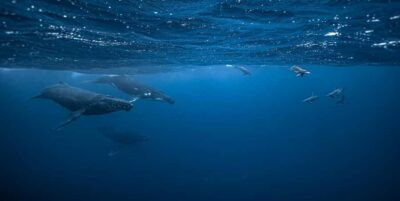
Moorea 4H Shared Boat Tour Whale Swimming and Snorkeling
Read our review →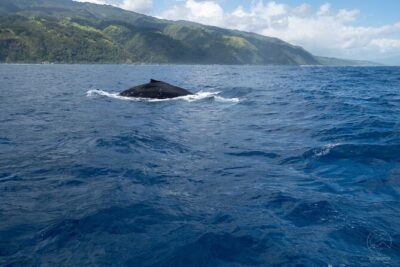
Whale watching on the preserved and quiet coast of Paea (Pk26)
Read our review →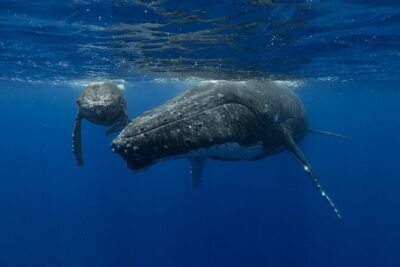
Half Day Whale Watching in a Small Shared Group
Read our review →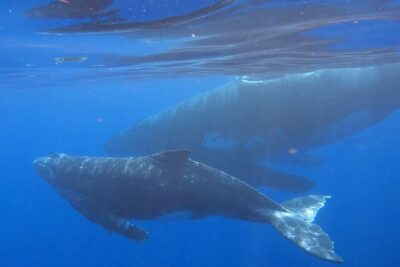
Browse the lists this tour appears in